Deutsche Bank has warned investors it will post a net loss of €6.2bn (£4.5bn) for the third quarter.
Higher capital requirements for its investment bank were partly responsible for the huge impairment charges of €5.8bn.
There was also doubt about the value of its Postbank retail division that Deutsche plans to sell.
Germany's biggest bank also said the dividend for the year could be cut or scrapped.
The group was also setting aside €1.2bn for legal costs.
Deutsche is embroiled in the Libor-rigging scandal and is being investigated by Swiss authorities for suspected price-fixing on the precious metals market.
Analysts had expected a net profit of about €1bn for the third quarter before the unexpected announcement on Wednesday night.
The bank also wrote down by €600m the value of its 20% stake in Hua Xia Bank, which it also plans to sell as it was no longer considered to be strategic.
The writedowns would not affect Deutsche's capital ratio, which stands at an expected 11% for the third quarter when measured by the most stringent test that is part of new European bank rules.
New chief executive John Cryan, who took over in July, is preparing to cut about 23,000 jobs - about a quarter of the workforce - in a bid to reduce costs, it was reported last month.
Deutsche Bank is due to publish its full third-quarter results on 29 October.


Troubled supermarket Tesco has announced another big fall in profits as it struggles to turn its business around.
Underlying profits for the first half of its financial year were £354m, 55% down on the same period last year, when it made £779m.
Its pre-tax profit was £74m, compared with a loss of £19m for the same period a year ago.
Like-for-like sales were down 1.1% for the UK, but sales volume rose 1.4%.
The number of transactions were also up by 1.5%.
Chief executive Dave Lewis has put pressure on profits by focusing on price cuts and putting more staff in stores, in an effort to attract customers back to Tesco.
He told the BBC he was "quietly confident" about Tesco's turnaround, admitting the group hit a low point at the end of last year.
"We obviously had some issues to deal with, we dealt with them. It meant that in the second half of last year we made no profit whatsoever in the UK.
"So if I compare to the second half of last year, the first half of this year feels like we've made some progress," Mr Lewis said.
"Our sales are growing compared to where they were either a year ago, or indeed in the second half of last year. And we've generated some profit as we rebuild the profitability of Tesco business. But importantly at the same time, improving what it is we're doing for our customers."

'Hurdles to overcome'

Mike Dennis, of global financial services firm Cantor Fitzgerald Europe, described Tesco's interim results as "disappointing".
"The risk now is that Tesco's recovery needs more time, requires more restructuring and asset sales and, with less cash flow, could require a rights issue to lower the indebtedness," he said.
Charles Hanover, investments partner at Dafydd Davies, said: "Tesco did not have a great set of numbers, but they were marginally better than expected.
"In the medium term, it's still a strong business, but in the short term, they still have hurdles to overcome in terms of competition from cheaper rivals."
Tesco has confirmed it will cost it about £500m to meet the government's proposed National Living Wage rate of £9 an hour by 2020.
Mr Lewis said the group already paid more than the £7.20 minimum which is being brought in under the National Living Wage plans next April.
He added that extra staff benefits already brought its hourly rate closer to £9.
Tesco has completed the sale of its Homeplus stores in South Korea, reducing its debt by £4.2bn.
It has decided to keep its Dunnhumby data business which runs its Clubcard loyalty scheme, after failing to attract enough interest in its sale.
In April, Tesco reported the worst results in its history, with a record statutory pre-tax loss of £6.4bn for the year to the end of February.
The supermarket is still under a criminal investigation by the Serious Fraud Office (SFO) after it admitted overstating its profits by £326m nearly a year ago.
Mr Lewis declined to comment in a BBC interview on reports that the company was close to striking a deal with the SFO.


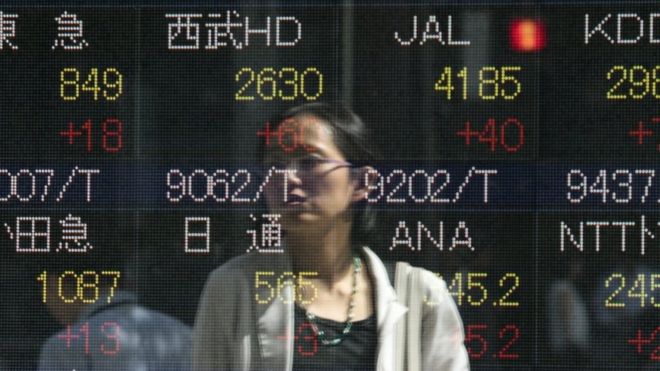
Shares in Japan were choppy on Thursday after official figures showed Japanese firms could be spending less on physical assets.
Core machinery orders, a leading indicator of capital expenditure, fell by 5.7% in August, compared with expectations for a rise of 3.2%.
Japan's Nikkei 225 index was down 0.49% at 18,234.04 points in mid morning trade.
Investors were also taking in fresh official trade numbers from August.
The country's ministry of finance said Japan posted a current account surplus for the 14th month in a row, but that exports were up 3.1% in August from a year earlier, compared to a rise of 7.6% in July.
The official numbers showed the surplus at 1.65tn yen ($13.8bn) against expectations for about 1.23tn yen.
Meanwhile, global investors were also absorbing a warning from the IMF which said "global financial stability is not yet assured".
A senior IMF official said the nature of the danger had changed. Financial stability in advanced economies has improved, but risks had moved towards emerging economies, Jose Vinals explained.

China reopens

As mainland Chinese markets reopened after the Golden Week holidays, the Shanghai Composite benchmark index was up 3.3% 3,153.46 in mid-morning trade.
However, Hong Kong's benchmark Hang Seng was down 0.66% at 22,366.48 points after marking its highest close since 20 August on Wednesday.
In Australia, the S&P/ASX 200 was up 0.42% at 5,219.90, with shares in mining giant BHP up 2.97%.
In South Korea, the Kospi index was flat, down 0.09% at 2,003.97.


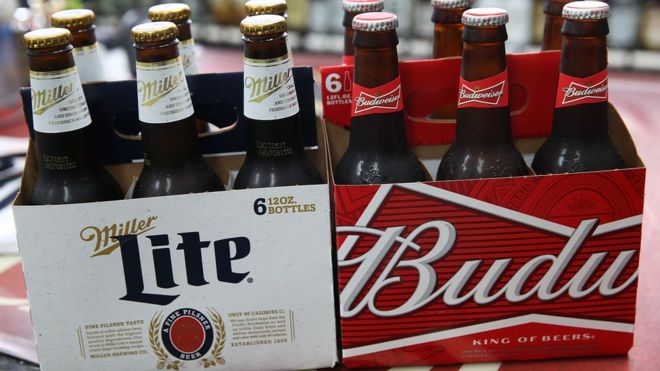
SABMiller has rejected an improved offer from Anheuser-Busch InBev that it says "very substantially undervalues" the company.
AB InBev on Wednesday raised its offer for SAB to £42.15 a share, having previously bid £38 and £40.
SABMiller closed up 2.4% at £37.08, having risen sharply since InBev first made its move last month.
Any deal between the two would create the world's biggest brewer, worth more than £180bn.
SABMiller said its board had formally considered the new offer, and had "unanimously rejected the proposal as it still very substantially undervalues SABMiller, its unique and unmatched footprint, and its standalone prospects".
AB InBev brews Budweiser, Stella Artois and Corona, while SAB brews Peroni and Grolsch, among others.
If a deal does go through, the merged company would produce one-third of the world's beer.
On Tuesday, SAB reported a 9% fall in revenues for the three months to September, which it blamed on weakening emerging market currencies.
Sales volumes were up 2%.
Shares in AB InBev closed up 0.6% in Brussels at €98.65.


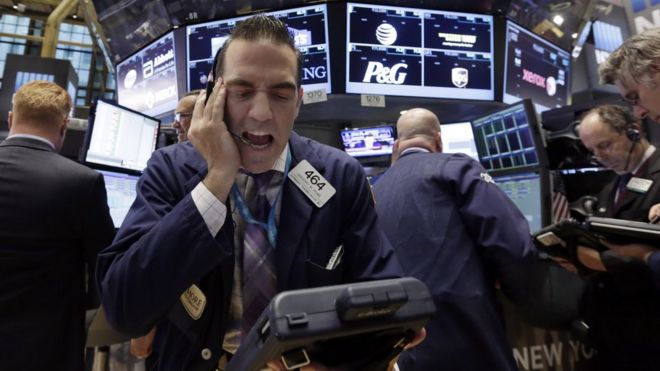
(Close): Shares on Wall Street ended higher on Wednesday despite a fall in oil prices after official US data showed large stocks of crude.
The Dow Jones Industrial Average closed up 0.73% at 16,912.2 points.
The price of Brent crude rose as much as 0.8% to $52.73, but later settled at $51.33 a barrel.
All the other main US indexes made similar gains, with the S&P 500 closing up 0.8% at 1,995.8, while the Nasdaq finished 0.9% higher at 4,791.1.
Oil company Chevron was the biggest gainer on the Dow in early trading and ended the day up 1.3%.
The construction equipment maker Caterpillar rose nearly 2% in morning trade, but finished down 0.6%.
Its shares have fallen from about $115 since the beginning of the year after cutting its workforce.
On the wider S&P500, shares in Yum Brands, the owner of KFC and Taco Bell, ended the day down 18.8%.
The company lowered its full-year earnings forecasts, saying it had been hit by slow growth in China and the strength of the dollar.


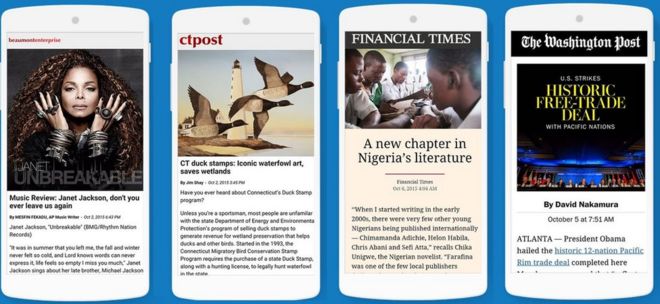
Dozens of leading news organisations, including the BBC, are taking part in a scheme that will allow their web-based articles to load more quickly on smartphones and tablets.
Leaders of the Accelerated Mobile Pages (AMP) initiative promise that the stripped-back versions of the pages will be "lightning fast" to load.
The move has been led by Google, which is providing use of its servers.
Participants believe it may discourage the use of ad-blocking plug-ins.
AMP works by simplifying the technical underpinnings of the pages involved.
Much of the Javascript code used on normal webpages is absent, meaning articles should not only appear faster but use less battery power.
Publishers can continue to tap into the same ad networks as before, but they will not be able to display some types of adverts including pop-ups and "sticky" images that move as users scroll down a page.
Twitter, LinkedIn, Pinterest and Wordpress have said they also intend to make use of the technology.
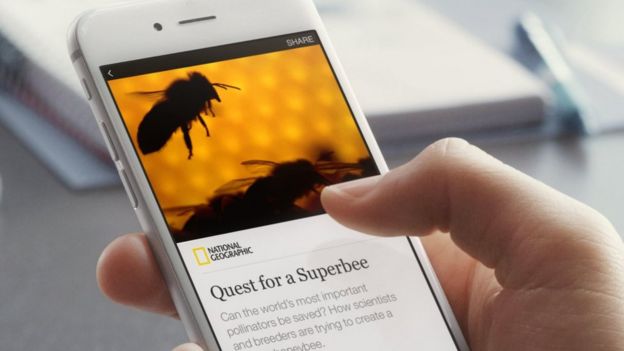
Facebook is a notable exception. The social network recently launched an alternative programme called Instant Articles, which speeds up the delivery of third-party content by hosting it on its own platform.


Cache and serve

News sites will automatically create AMP versions of their stories at the same time as they publish and update the originals.
Google intends to scrape these from the web, store them on its cache servers and then serve them to users via its Search and News tools.
Likewise, the social networks involved are also expected to cache and direct users to the AMP articles rather than the originals if users click on relevant links in their apps.
"Today, roughly 40% of users abandon an article if it doesn't load after six seconds," Danny Bernstein, Google's director of product partnerships, told the BBC.
"To be able to pull down an article instantly from Twitter, from Pinterest is a remarkable thing.
"We'll support accelerated mobile pages in search in 2016, but the code is public, so publishers can launch them today, and we expect some smaller apps to be able to render AMP files immediately."


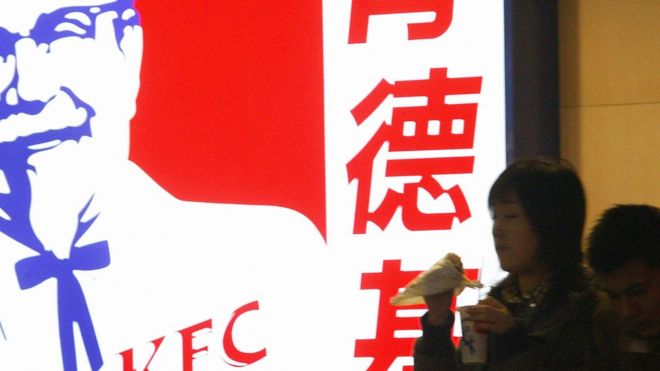
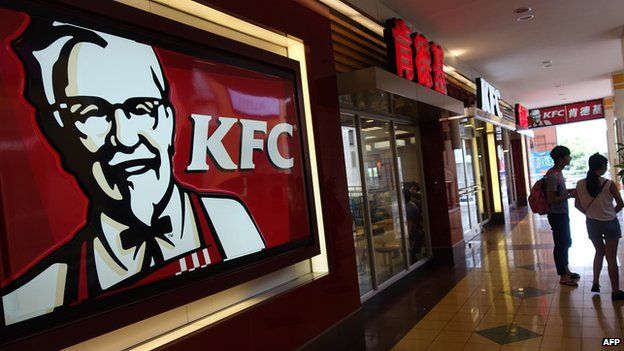
Shares in Yum Brands, which owns KFC and Pizza Hut, fell more than 17% in after-hours trading in the US after the firm reported poorer than expected results for the three months to 5 September.
Yum also lowered its full-year earnings growth forecast in its key market of China.
The firm blamed a stronger US currency against the yuan for its poor results.
But it also still recovering from a food scandal last year.
The group's KFC restaurants in China suffered in July last year after a television news story linked the brand to supplier Shanghai Husi Food, which was accused of selling meat that was out of date.
"The pace of recovery in our China Division is below our expectations," said Chief executive Greg Creed in a statement.
"While it remains difficult to forecast China sales, we are now estimating full-year same-store sales to be low single-digit negative," the firm said.
"Given a slower-than-expected recovery in China sales, particularly at Pizza Hut Casual Dining, as well as stronger foreign exchange headwinds, we now expect full-year EPS (earnings per share) growth to be low-single-digit positive."

Globally, Yum Brands reported third-quarter earnings per share growth of 14%, with adjusted third-quarter earnings of $1 (£0.65) a share and revenue of $3.43bn (£2.25bn).
Expectations were for earnings per share growth of $1.06 per share and revenue of $3.67bn.
"Outside of China, our Taco Bell and KFC Divisions continued to sustain their positive sales momentum," said Mr Creed, "while Pizza Hut was relatively flat."
"Given our lower full-year expectations in China, combined with additional foreign exchange impact, we now expect 2015 EPS growth to be well below our target of at least 10%."